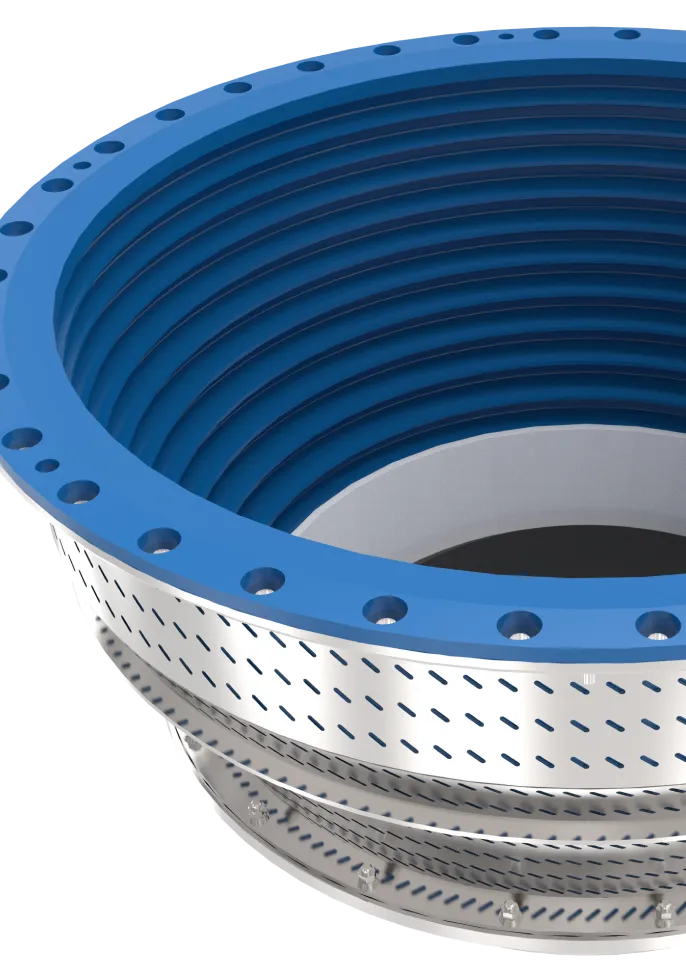

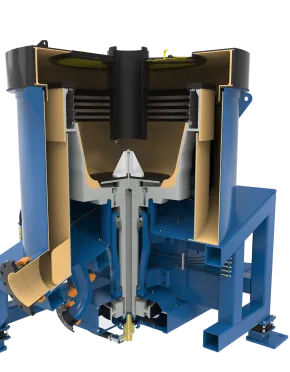



This paper was written by Lei Pan from Michigan Technological University. It presents results from bench-scale Falcon L40 testing using the unfluidized (UF) bowl to simulate a Falcon Ultra-fine ‘˜UF’™ concentrator for recycling Li-ion batteries.Â
The testwork targeted the separation of the anode active material (graphite) and cathode active material (lithium transition metal oxides, LTMOs) from black mass (unseparated mixture of anode and cathode material) using centrifugal gravity separation. The testwork achieved a high degree of separation of anode and cathode material.Â
Graphite has a specific gravity (SG) of 2.26 and LTMOs have a SG of 4.5-5.0 as lithum cobalt oxide and lithium nickel manganese cobalt oxide. This gives a Concentration Criteria value of greater than 3.0 which suggests that gravity separation is possible beyond 75 microns.Â
From the paper’s conclusion:
“The Falcon UF gravity separation method was also extended to separate the electrode active materials in the black mass from spent cylinder Li-ion batteries. The result showed that after three passes in the Falcon UF concentrator, the grade of cathode active material in the concentrate product exceeded 98%, with no visual presence of anode active particles. The present result demonstrated an effective method for concentrating cathode active materials from the black mass from spent li-ion batteries and the ability to recycle high-purity cathode active materials from spent Li-ion batteries that can be regenerated for new battery application.”
To read more, please download the full Technical Paper:Â
Sepro Labs can conduct the same kind of Falcon amenability testing as shown in the paper and has experience with testing black mass material. For more information please see our scoping studies page.
Download Paper (PDF) Christopher Lam